This week flows from last week's topic about answering questions. But now we're digging into questions so we can figure out what's really underneath.
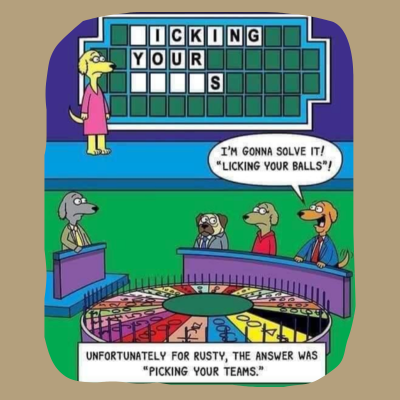
And, we'll end with a hilariously wrong, but confident, answer. 🤣
🍽 The Main Course: Wanting to Want it.
A lot of the work I do with clients is about slowing questions down a little. Because the first question people ask is often not the real question.
Some real life examples:
“Should I go on a GLP-1?”
Well… what are you hoping will change?
Because if the answer is:
“I want relief from obsessive food thoughts,”
that’s a different conversation than:
“I’m terrified of aging in a larger body.”
And that’s a different conversation than:
“I’m exhausted and I want something to finally feel easier.”
Same question on the surface.
Very different conversations underneath it.
~~~~~
Or:
“Why do I keep procrastinating?”.
Before we even get into habits or motivation or discipline, I’m often wondering things like:
How impossible is the standard you’re trying to maintain?
Do you actually want this change? Or do you just want to be the kind of person who wants this?
Those are not the same thing. A lot of people are trying very hard to force themselves into lives that look good from the outside but don’t actually fit them very well.
Suddenly we’re talking about something very different than discipline.
Like, every few months I briefly let myself believe I want to be one of those people who wakes up early to meditate, journal and do a peaceful morning workout.
But the truth is…I don’t.
I just want to want it.
There’s a difference between genuinely wanting something and quietly believing you’d be a better person if you did.
~~~~~
Or:
“How do I stop eating emotionally?”.
People understandably want strategies to stop.
But I’m more curious about things like:
What’s happening right before it?
What gets quieter afterward?
What would feel harder if the eating disappeared tomorrow?
Because even when a behavior is causing problems, it’s usually helping in some way too. Otherwise we wouldn’t keep returning to it.
That doesn’t mean staying stuck forever. Or giving up on change.
It just means that understanding the job a behavior is doing is often more useful than immediately trying to overpower it.
~~~~~
Or:
“How do I know if I’m making the right decision?”
And buried inside that question is often another one:
“How do I make sure I never feel uncertainty, regret, discomfort, grief, or self-doubt afterward?”
Which is the part most of us don’t like very much. It's when we realize we’re no longer talking only about the decision itself.
And that’s usually the point where we want to slow the whole conversation down.
A lot of the time, the first question isn’t wrong. It’s just incomplete.
💉 Table Talk: More than a Prescription
It's interesting how quickly conversations about GLP-1s stop sounding like conversations about medication and more about what kinds of bodies, choices, and appetites they believe deserve approval.
To be fair, wellness culture has moralized plenty of other medications too. You can absolutely find corners of the internet that treat blood pressure medication, cholesterol medication, antidepressants, or diabetes medication as evidence that someone simply didn’t lifestyle hard enough.
But GLP-1s seem to hit a particularly charged nerve because they touch food, hunger, body size, effort, identity, visibility, and aging all at once.
And I think that matters because it becomes very hard to think clearly about a deeply personal decision when the conversation around it is carrying that much emotional and moral weight.
~~~~~
That's why it can be useful to notice not just what reaction you’re having to these conversations, but why.
What feels activating about it?
What assumptions immediately come online?
What story about bodies or effort is getting touched for you right now?
Because most of the time, people aren’t reacting only to medication.
They’re reacting to everything the medication has come to represent.
That's why I think these decisions deserve more space for thoughtful questions... and less pressure to immediately land in a camp.
😑 Sweet Moment(s): Wrong Answer.
I'd love to hear from you!
Until next time - more dogs, less dogma. Always.
Carol
P.S. New here? Welcome! Curious about past issues? You can find them, here.